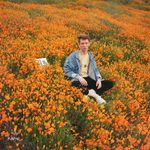
The Rasa Tea Time Edition presents contemporary Ambient, classical, Electronica and music from the tea-traditions. Al Gromer Khan, key figure of Ambient- and contemplative musicsince 1975, acting as player, composer and curator. His distinctive unique Paisley Music style has won him a circle of friends throughout the world.Night Tides Playlists and Program Archiveswww.kcur.comAmbienceboth Venerable and Ancient Albums which are absolute Classics in the Ambience genre, grouped by their period. They are all beautiful, and near-and-dear to my heart. 2006back to top •\tMilieu : Beyond the Sea Lies the Stars •\tAl Gromer Khan : Turya https:\u002F\u002Fwww.sleepbot.com\u002Fambience\u002Fclassics.html#TOP blog.myspace.com\u002Fnevie1 The widely noticed latest work by Al Gromer Khan allows access to ´the transcendental state´ which the artist doesn´t claim to represent but has had glimpses of. One piece refers to Indian sorcerer Shri Nityananda who passed away in 1961.Biographical NotesAl Gromer Khan spent his early years in London and India where he studied Indian music with renowned musical masters. Since that time he has been practicing sitar and surbahar daily. He travelled a great deal and has given breath-taking concerts in Europe and India. As a composer and producer he developed a style of contemporary music that was originally influenced by John Cage, Joseph Beuys and Vilayat Khan. It has become known as Paisley Music to lovers of Ambient music around the world. As a writer he contributed documentations on music for a number of radio stations and wrote two novels in German. Release sheet T U R Y AThis Ambient music is based on many years of experimentation with simple melodic cycles on different levels of emotion.The aim is to re-awaken a familiar state of feeling that has been covered through layers of thought. In terms of melody the transition from stage three to stage four and from stage four to stage five seems important. The fourth note represents - not symbolises – the female aspect which is thus fecundated in terms of the spirit: the original tantra.TURYA aspires to go to the place where music originally comes from. TURYA is not composed music in the old sense. At the same time it is based on decades of research, practise and sifting. Ordinary music produces outer intensity while TURYA seeks inner intensity . The two types are reciprocal in their relationship. This inner intensity is experienced as a kind of magnetism, sanctifying ordinary circumstances and objects. TURYA´s music takes place inside the music. It does not require confirmation through trends. AGK 8. April 2006 ´In India there once lived a saint who was known for his goodness´. The sentence both elated and depressed me on account of my own limited capacity. I turned on the television and switched from channel to channel. A lady in an American movie wanted to know: What´s that supposed to mean? I switched channels. I´ve no idea answered the man in the talk show. I switched back: Yes the lady in the movie said. No answered the man in the talk show after I´d switched channels again. What is happening to me? I went to the kitchen, put the kettle on and started thinking about money - some people owned portfolios. ... shares took a drastic nose-dive to-day someone on the telly said. So I turned it off. That´s when it started, during an early winter invasion in November that felt like a reversed spring. Through layers of wet snow in the field over by the beeches shone bright green leaves, that same juicy green that creepers show in April when they announce blissful May. But this was November and there was nothing to look forward to on that day other than getting a log-fire going in the evening, till the stove-pipe turned burning red. And the peace. All of a sudden there was this ´other condition´: relief and contentment. A feeling rather than a scientifically measurable term, gratitude that youthful ambitions didn´t work out and one didn´t end up in cobwebs of obligations. Success seemed to imply hindrance to the advance of the soul. The ´feeling´ consisted mainly of the absence of certain elements: pop music, mechanical noise, people... A term I read in a novel once, came to my mind: ´Misanthropologist´. I had to laugh, things were put into reverse, what had been interesting before was now boring, what was important was now unimportant and what used to be right was now wrong. A reciprocal element appeared in many things: as one thing improved, another deteriorated. `The Reciprokal System´ I called it. (One has to give names to things at a certain age). I was, however, oblivious of the fact that this apparently unspectacular state would later on lead me into certain dilemmas. I was convinced that somehow it had to do with Vilayat´s sitar music. The playing finger of his right hand danced up and down like the sting of the scorpion. It was around the time when Indian music went out of fashion. Even the Catholic Church had intervened: We have instructions from above not to allow your music to be performed here anymore. I didn´t ask: from how far above...? Next, muscle men replaced thin hippie boys in fashion shows. Cars with wide tyres and boom-boom appeared. Refined sentiments were regarded a weakness. Little smiles between strangers went, too. The term ´soul´ was subtly discredited and it wasn´t long till I wanted nothing more than my peace and quiet. Vilayat Khan had been like opium or heroin: in the end I always relapsed - the soul had no knowledge of a better, a richer watering place. After forty thousand hours of practice and thirty-five years later there is still hope that the sentiments that stem from this music may help me break through to a life of ordered neglect.Situations for which T U R Y A is ideally suited:You notice that the sky has three different shades of blueYou realize that one of your brain-halves is under-represented - the problem cannot, however, be solved by putting on lipstickYour childhood dreams have come true, your realize, however, the folly in themYou experience particular clarity of vision You feel happy and grateful that you do not have a toothache or live in a warzoneYou realize that art is more than a concept You suddenly realize that you do not need a psychotherapist or an interior decorator, and that you are your own fashion designer You know someone who voluntarily --- TURYAThe pieces1 Tardeo A reminiscence. Fragments of a melody that I used to practise in a small room in Bombay, India, sometime in the early seventies of the twentieth century. As these fragments resound a time warp occurs, and sounds, odours, weather, people reappear – it seems that thirty years have not really passed since then. The impression is blissful, precious, but lasts only a split second. It is perhaps for this reason that I kept this piece so short2 ´Stamboul Train´. This title is a quotation for two reasons: firstly, there is Graham Greene´s novel. It inspired me to call a chapter of my novel ´The Paisley Handicap´ after it. The trip by train to Istanbul was undertaken by my wife Ute and myself in 1987. The chapter in the novel is pure fiction - only Abdullah is real. The piece is based on a Turkish folk or dervish song, that we heard on the radio in Turkey. There have been a number of earlier versions of this piece that I discarded, versions that, in my opinion, lacked the metaphysical balance. This version from 2003 satisfied me. 3 The Quiet World of Shree Nityananda. Again several versions were made until I settled for this one. It represents an India without noise, stress and competitive money-oriented thinking, that once existed. I still experienced this India in my younger days. Before my mind´s intuitive eye the life and times of great Yogi and sorcerer Nityananda appear. Shree Nityananda never said very much to anyone but who apparently gave inner peace to many.4 Kubra The intention here was to slow down the listeners frequency of thinking instead of creating excitement. This style of composition was favoured by Florian Fricke (of Popol Vuh – fame), a much underestimated German composer of the 1970ies. I had the good fortune of working with him on a number of projects, including film music for Werner Herzog. Kubra contains two sitars - one male, one female - in a dialogue, they are accompanied by an incongruent simple drum beat.5 Die Heiligsprechung des Helmut S. The German word ´Heiligsprechung´ points toward a declaration of sainthood. In this case, however, the meaning and the context of the word and the person concerned are left ambigously open. Certainly holiness concernes persons who have not the slightest interest in being ´certified´ by theologicians or made public. To me theology has always seemed to be the slightly ridiculous attempt to assess exalted states of consciousness with the means of ordinary ones.6 The Paisley Handicap This stems from the early nineteen-nineties, a time when I thought that I had a clear vision of the music of the future. It is one of my ´structural´ pieces, one that is supposed to incorporate many genres of music. The mezzo- soprano part is performed by Martina Koppelstetter. 7 Turya The title track aims at the ideal of transforming and purifying any situation or object exposed to its sound. Dispite its very simple form, this piece is the result of a long and tedious work process, one that includes the exploration of different subtle emotional states with their specific landscapes, plus the sifting and comparing of the effect of the music at different times, places, moods, plus the reaction different people showed. Turya is an Indian word, meaning the transcendental state.

您可能对它们还感兴趣
1 / 1