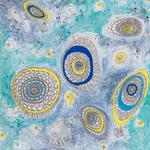
by Thom JurekIn 2004, His Name Is Alive played a show at the University of Michigan Art Museum. That gig, intended as a one-off, was a tribute to vanguard saxophone great Marion Brown. The show featured an extended edition of HNIA, it was performed beautifully, and it was recorded. Warn Defever was pleased enough with the show itself that he decided to record an album of this material. Three of the eight selections on Sweet Earth Flower are taken from that 2004 gig, the rest are studio cuts. Brown came up during the free jazz explosion and recorded for Fontana, ESP, ECM, Impulse, Freedom, Improvising Artists, and Baystate, to name a few. For health reasons, he has recorded only sporadically since about 1990, and hasn't recorded an album under his own name since 1992, though he has been a guest with son Djinji Brown, and with his old friend Harold Budd. Brown's contribution to the vanguard jazz literature of the '60s and '70s is obscure but invaluable and is highlighted to great effect here. Brown, who could do the free improvisation thing as well as anyone (and did, as his ESP and Freedom records attest), was also given -- particularly after 1970 -- to more modal and melodic forms of improvisation and more structured composition. Unfortunately, few of the post-'70s recordings are available, and none of them in the United States. HNIA showcases much of the music from that period -- ignored even by all but the most ardent post-'60s jazz fans -- here with excellent results. Elliot Bergman and Justin Walter of Nomo are in the house, playing saxophones and trumpet, respectively (Bergman plays some Rhodes too), and handling the lion's share of the soloing. While they may be the obvious shining stars of this set, it is actually pianist Erik Hall who shines like an exploding star. The structure of Brown's tunes and even his solos are based on circular rhythm, where phrase, modality, and harmonics all are based on the science of a returning rhythmic place to bring the listener back into no matter how far she may travel. Hall, who plays Wurlitzer electric piano, is responsible for helping to create the hypnotic vibe, the steady stream and flow of harmonic ideas that give Bergman, Walter, and saxophonist Michael Herbst their flights of fancy. His playing is subtle, rooted in the structure and form, but also in pulse. He creates all the middle space that allows the rhythm section to be more fluid, though they don't stray too far from the home fires either. Defever, who plays guitar and piano here, is an utterly painterly guitarist, whether he's playing wonderfully warm reverbed chords and vamps, or soloing. ... Read More...

您可能对它们还感兴趣
1 / 1